
Table of contents
Want the fast version?
Open Studio, upload one design, pick one product, generate 10 outputs, then expand from there.
PDP gallery roles (what to generate)
A Shopify PDP gallery should answer “what is it, how does it look, and what does the variant change?” Instead of generating random images, decide a set of roles per product family:
Hero
One consistent framing for collection pages and search snippets.
Angle / alternate
A second view that reduces ambiguity (different angle, different crop).
Lifestyle
Context and scale (desk, model, room). Keep the vibe consistent per collection.
Detail
Close-up that builds trust: print, texture, label, or sizing callout.
Once roles are stable, your catalog images look like a brand system instead of a collection of one-off mockups.
Variant coverage without doubling work
Not every variant needs a full gallery. A practical approach for apparel and POD products:
- Give your top variants a unique hero (and maybe an alternate).
- Share 2–3 lifestyle images across variants if the vibe is consistent.
- Use one detail image that applies to all variants (fabric/print close-up, size chart).
This keeps your PDPs informative without exploding your production workload.
Bulk workflow in Mockup Genie Studio
Open Studio and run a small test batch first. The goal is to lock your framing before you scale up.
- Upload artwork once (high-res PNG recommended).
- Select a product family and the variants you want to cover.
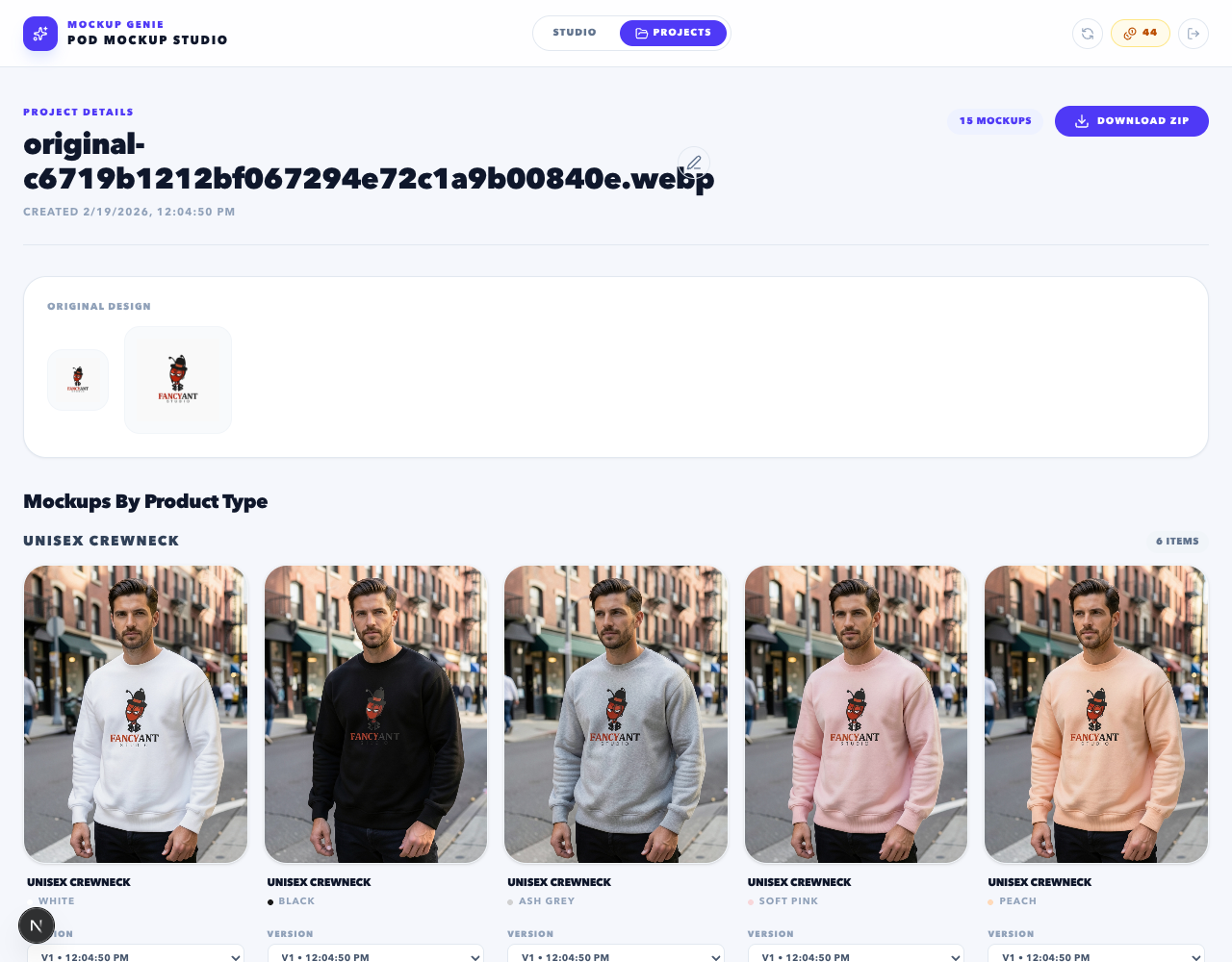
- Generate 10 outputs, review framing, then scale the full queue.
- Save the run as a project and export a ZIP from Projects.
Consistency rules for catalogs
- One crop rule per collection: do not mix wide and tight heroes across collection pages.
- One background vibe: keep lifestyle tone consistent so the grid feels like one brand.
- Readable primary image: your hero should work at thumbnail size.
- QC the first batch: fix framing early, then scale to hundreds confidently.
Operational tips: naming, collections, refreshes
Publishing speed comes from consistent naming and collection-level refresh cycles:
- Name exports like handle_variant_role so mapping to Shopify is fast.
- Refresh by collection: update 20 products with one consistent style rather than improving one product at a time.
- Keep a “style baseline” project you can reuse as a reference when you do new launches.
Supplier-specific workflows (Printify/Printful)
If you run POD through suppliers, your inputs are usually product templates, color lists, and publish-ready specs. Use this guide to keep mockup generation aligned with supplier variants:
References
Platform docs and workflow references used to keep this guide grounded.